Health and Safety Policy — Flat Clearance Redbridge
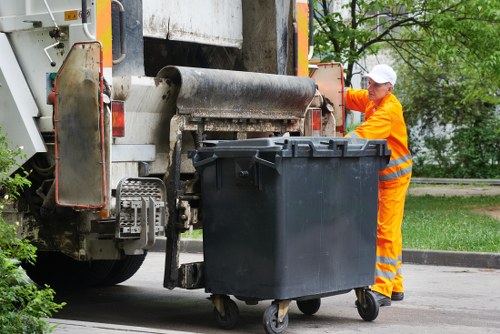 This Health and Safety Policy sets out the commitment of our flat clearance and rubbish removal business to protect the health, safety and welfare of employees, contractors and the public while providing flat clearance Redbridge and surrounding service area operations. The policy applies to all tasks associated with house and flat clearance, waste collection, transport and disposal, and associated site activities. Our objective is to ensure that every clearance project is delivered with minimal risk and maximum compliance with recognised safety standards.
Our organisation recognises that safe working practices are integral to efficient rubbish clearance services. Responsibilities are allocated so that managers, supervisors and operatives understand their roles: management will provide leadership and resources; supervisors will enforce safe systems; and staff will follow procedures and report hazards. Everyone engaged in a flat clearing task must cooperate to maintain a safe working environment and prevent accidents.
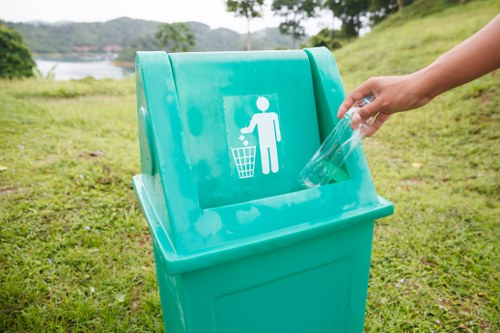 The scope of this policy covers domestic and commercial flat clearances, bulky waste removal, recycling operations and any site preparation or minor remedial work carried out as part of a clearance. We commit to assessing each job for hazards such as manual handling risks, sharps and hazardous materials, working at height, traffic management during vehicle loading and environmental contamination risks. Risk assessments will be recorded and proportionate control measures implemented before work begins.
Risk Management, Training and Competence
 Operating as a rubbish clearance service, we ensure that staff receive regular training in safe manual handling, correct use of mechanical aids (trolleys, sack trucks), and safe loading techniques for vehicles. Training records are maintained and updated; new operatives undergo site induction that covers emergency arrangements, PPE requirements and safe waste segregation practices. Competence checks are performed to ensure workers can carry out assigned tasks safely.
Key controls used to reduce risk include:
- pre-job briefings and documented risk assessments;
- use of appropriate PPE such as gloves, safety boots and eye protection;
- mechanical aids for heavy or bulky items and team-lift procedures;
- clear signage and traffic management for vehicle movement during collections;
- safe segregation and labelling of hazardous or electronic waste for regulated disposal.
We place emphasis on reporting and investigating incidents and near-misses to identify root causes and prevent recurrence. All incidents are recorded and reviewed by management and used to inform refresher training and changes to working procedures. Workers are encouraged to raise safety concerns without fear of reprisal and to contribute suggestions for safer working methods.
Equipment, Vehicles and Environmental Safety
All vehicles and equipment used for flat clearance are maintained to a high standard through scheduled inspections and servicing. Load securing, vehicle weight limits and roadworthiness checks form part of daily operations to ensure safe transit of collected rubbish and cleared materials. We require drivers and operatives to follow safe loading patterns and to secure loads before departure.
 The company is committed to environmental responsibility by promoting waste minimisation, reuse and recycling wherever possible. Hazardous materials discovered during flat clearance, including asbestos fragments, chemicals or contaminated items, will be isolated and handled by authorised personnel and disposed of through licensed channels. Waste transfer notes and documentation are maintained to demonstrate compliance with waste management requirements.
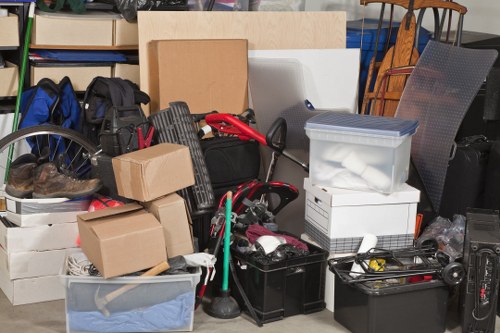 Emergency procedures are in place for incidents such as injury, major spillages or vehicle incidents. First-aid arrangements, contact protocols for emergency services and contingency plans for site hazards are part of the induction and are accessible to all staff. Regular drills and reviews ensure the organisation is prepared to respond effectively and safely.
Contractors and sub-contractors engaged on site must follow our safety standards and provide evidence of their competence and insurance. Before any subcontracted work, we verify their method statements, risk assessments and training records. Where appropriate, we conduct joint safety briefings to align working methods and expectations for safe outcome delivery.
The policy is supported by active management oversight, workplace inspections and performance monitoring. Audits are carried out periodically to check compliance with this policy and to identify opportunities for improvement. We use a combination of quantitative metrics (incident rates, training completion) and qualitative feedback from site observations to drive safer practices.
Review and commitment: This document will be reviewed at least annually or following any significant change in operations, legislation or after a serious incident. Senior management endorses this policy and is committed to providing the resources necessary to implement and maintain it. By adhering to these principles we aim to deliver professional, safe and environmentally responsible flat and rubbish clearance services in the service area.