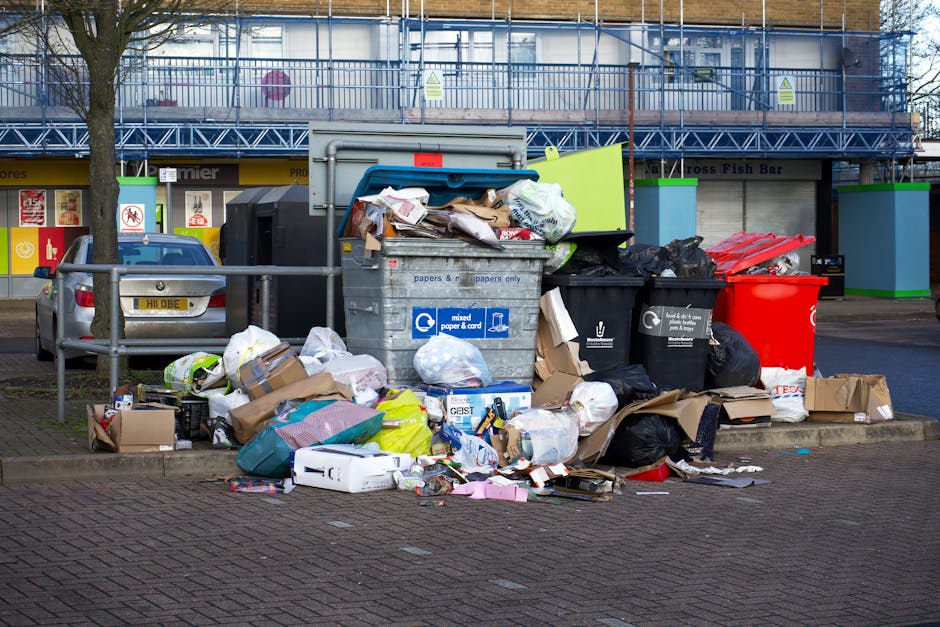
Redbridge Council bulky waste rules what to know
If you are staring at an old sofa in the hallway, a broken wardrobe in the spare room, or a fridge that nobody wants to touch, the local rules can feel oddly vague. That is exactly why Redbridge Council bulky waste rules what to know matters. The short version? You need to understand what counts as bulky waste, what the council will and will not take, how to prepare items properly, and when it makes sense to choose a faster removal option instead.
This guide gives you the practical picture, without the fluff. You will see how bulky waste collections usually work in Redbridge, where people trip up, and how to plan a tidy, compliant clearance without last-minute stress. Truth be told, most problems happen because people assume "big item" automatically means "any item". It doesn't.
For readers dealing with larger home clearances, moving stress, or a mixed load of furniture and appliances, you may also find the wider service pages useful, such as house clearance support, furniture disposal, and fridge and appliance removal.
Table of Contents
- Why Redbridge Council bulky waste rules what to know Matters
- How Redbridge Council bulky waste rules what to know Works
- Key Benefits and Practical Advantages
- Who This Is For and When It Makes Sense
- Step-by-Step Guidance
- Expert Tips for Better Results
- Common Mistakes to Avoid
- Tools, Resources and Recommendations
- Law, Compliance, Standards, or Best Practice
- Options, Methods, or Comparison Table
- Case Study or Real-World Example
- Practical Checklist
- Conclusion
- Frequently Asked Questions
Why Redbridge Council bulky waste rules what to know Matters
Bulky waste rules are not just admin. They decide whether your collection goes smoothly, whether an item is accepted, and whether you avoid delay or extra hassle. If you put the wrong thing out, or leave it unprepared, the whole collection can be refused. And then you are back to square one, with a sofa blocking the landing and no one in the mood for more lifting.
For households in Redbridge, these rules matter for three practical reasons:
- Space: big items take up room quickly, especially in flats, shared houses, and small terraces.
- Safety: some items are heavy, awkward, or hazardous if handled badly.
- Compliance: certain materials, appliances, and waste types need separate handling.
The point is not to make life difficult. It is to make disposal safer and more controlled. That is especially relevant if you are clearing an old garage, dealing with a post-move pile-up, or handling a family property where decades of belongings have somehow multiplied in every corner.
There is also a cost angle. Paying for the wrong service, or booking a collection that cannot take your items, wastes time and money. A little planning now can save a proper headache later. To be fair, that is often the case with waste removal in general.
How Redbridge Council bulky waste rules what to know Works
Most council bulky waste arrangements follow a similar pattern. You identify the item, check whether it is accepted, book a collection or take it to an approved facility if allowed, and place the items exactly as requested. The council may have limits on item types, sizes, quantities, and access conditions.
In plain English, bulky waste usually means large household items that are too big for normal household bins. Think wardrobes, tables, mattresses, shelving, and similar items. But that simple label hides a lot of detail. For example, a wooden chair is very different from a fridge, and a sofa is very different from garden rubble. Same "big item" category, different handling needs.
What usually makes a collection successful is preparation. Items often need to be ready for easy lifting, free from personal belongings, and separated if there are different waste types involved. If there are appliances, upholstered furniture, or damaged pieces with sharp edges, extra care is sensible. Not dramatic. Just sensible.
Some items can also sit better under a separate service route. For example, if you only need old furniture removed, a dedicated furniture clearance option may be more practical than trying to fit everything into a general trip. If your load is mixed, a broader waste removal service may make more sense.
What typically counts as bulky waste
Although the exact accepted list can vary, bulky waste commonly includes:
- sofas and armchairs
- mattresses and bed frames
- tables, chairs, wardrobes, drawers, and shelves
- TV stands and other large household furniture
- some white goods, depending on the collection method
If you are unsure whether an item counts as bulky waste or needs special handling, pause and check before booking. A five-minute check can save a cancelled pickup later. Seriously, that small step matters more than people think.
What usually does not go in a standard bulky collection
Not every large item is welcome in a normal collection. Common exclusions often include hazardous materials, construction waste, gas cylinders, tyres, and certain electrical or chemical items. If you are clearing after DIY work, a dedicated route such as builders waste clearance may be the better fit.
For anything risky or potentially contaminated, use a separate handling route. The same applies to items that could damage handlers or vehicles. No one wants a mattress full of broken glass or a bag of mystery chemicals mixed into a furniture load. Let's face it, that is a bad day for everyone.
Key Benefits and Practical Advantages
Knowing the rules brings more than peace of mind. It gives you options. When you understand what the council will take and how, you can decide whether to book a collection, move items yourself, or combine services.
- Cleaner scheduling: you can plan around collection windows instead of guessing.
- Fewer refusals: correctly sorted items are less likely to be rejected.
- Safer handling: the right route reduces lifting risks and accidental damage.
- Better value: you avoid paying twice because a load was unsuitable.
- Less disruption: a tidy clearance keeps rooms, halls, and stairwells usable.
There is also a psychological benefit, which sounds fluffy until you are in the middle of it. Once the bulky stuff goes, a room suddenly looks bigger, quieter, and less chaotic. You can hear the difference sometimes. It is odd, but true.
For heavy household items specifically, it can help to compare your choices against focused disposal pages such as mattress and sofa disposal and furniture disposal. Those options are often easier to align with the actual item type than a generic all-in-one approach.
Who This Is For and When It Makes Sense
This topic is relevant if you are:
- moving home and need to clear bulky furniture quickly
- downsizing and sorting what stays, what goes, and what gets donated
- emptying a rental property between tenants
- clearing a loft, garage, or spare room that has become a storage black hole
- removing one or two large items after a replacement purchase
- helping a relative clear a home with mixed belongings
It also makes sense if you live in a flat or managed building where access is tighter. Stairs, lifts, parking restrictions, and narrow corridors all change the practical side of bulky waste. A bulky item that is fine on paper can become awkward very quickly when it has to turn halfway up a staircase.
If you are dealing with a flat, the logistics may be more important than the item itself. In that case, services like flat clearance can be a better match because they are built around access issues and shared-building realities.
And if the project has grown beyond one or two items, a broader service such as home clearance or loft clearance may save time and keep the process simple.
Step-by-Step Guidance
If you want the least stressful route through bulky waste disposal, use a simple process. No need to overcomplicate it.
1. Identify every item clearly
Write down what you have. Be precise: "sofa" is useful, but "three-seater fabric sofa with a detachable corner section" is better. That level of detail helps you judge size, weight, and whether an item might need special handling.
2. Separate standard bulky waste from special waste
Keep furniture away from any hazardous waste, building rubble, or electrical oddities. Mixed piles are where mistakes happen. If you have damaged appliances, sharp metal, or anything potentially unsafe, sort it separately and check the correct route first.
3. Check access conditions
Look at the route from item to vehicle. Doors, gates, stairs, lifts, parking, and turning space all matter. If a sofa cannot get out without scraping the wall, you will want to know that before collection day, not after.
4. Prepare items for collection
Remove loose contents, detach legs if required, and make items reasonably accessible. In some cases, it helps to wrap sharp edges or tape doors shut. That small bit of prep can make a collection smoother and safer.
5. Book the right type of removal
Match the service to the waste type. One broken wardrobe is not the same as a mixed clearance of cabinets, a mattress, and a fridge. If you need an all-round household solution, consider house clearance. If the main issue is a worn-out couch, the dedicated mattress and sofa disposal page may point you in the right direction for those specific items.
6. Confirm what happens next
Ask how the collection works, what you need to do on the day, and whether any items must be separated. It sounds basic, but basic questions prevent basic mistakes. Sometimes the boring question is the important one.
Expert Tips for Better Results
Here is the sort of advice that makes bulky waste jobs run smoother in real life.
- Group items by type. Furniture, appliances, and garden items should not be mixed unless the service clearly allows it.
- Measure awkward pieces. Tall wardrobes and wide sofas can be trickier than heavier items.
- Check for hidden risks. Drawers can contain glass, screws, batteries, old paperwork, or forgotten chargers.
- Plan around access times. In some properties, morning collections are easier because hallways are clearer and neighbours are quieter.
- Keep fragile areas clear. A cleared path reduces knocks, scuffs, and that awkward silence when someone clips a doorframe.
One practical trick: if you are clearing a room with several items, start at the far end and work back towards the exit. It keeps the route open and stops the pile from becoming a maze. Simple, but effective.
For mixed households, a little organisation makes the whole process feel less overwhelming. Separate donation-worthy pieces, recycling candidates, and true waste before anyone starts carrying. That way you are not making decisions in the hallway while holding a lamp in one hand and a side table in the other.
Common Mistakes to Avoid
Most bulky waste problems are avoidable. The same patterns come up again and again.
- Leaving items unprepared: full drawers, loose cushions, and attached clutter slow everything down.
- Mixing banned items with accepted ones: one unsuitable object can spoil a whole load.
- Assuming appliances are treated like furniture: they often are not.
- Ignoring access issues: narrow stairs and blocked paths are a common cause of problems.
- Booking the wrong service: a small job and a clearance job are not always interchangeable.
Another common mistake is underestimating the emotional side of the job. Clearing a parent's home, for example, is never just about furniture. There may be memories involved, and that can slow the process down. Give yourself space. You do not have to do it all in one frantic afternoon.
Also, do not leave sharp or unstable items propped in a way that could tip. It sounds obvious, but you would be surprised how often a chair, mirror, or broken shelf becomes a hazard right at the doorway.
Tools, Resources and Recommendations
You do not need much in the way of special equipment, but a few basic tools make bulky waste handling easier:
- strong gloves for grip and protection
- tape, cord, or straps for securing loose parts
- a measuring tape for checking awkward dimensions
- bin bags or boxes for clearing loose contents
- a torch for lofts, garages, or under-stairs spaces
If you are planning a bigger project, it can help to think in zones. Start with one room, one cupboard, or one category of item. That keeps momentum going. For example, a garage can quickly become a mix of tools, broken chairs, tins, old toys, and garden waste. If you are tackling that sort of space, a garage clearance route is usually more realistic than trying to manage it item by item.
Outdoor waste is another category worth separating early. If your bulky waste job includes old planters, broken sheds, or garden furniture, a dedicated garden clearance service can be more suitable than a general indoor-only collection.
For broader sustainability questions, it is sensible to review the company's approach to reuse, sorting, and disposal. A good starting point is the recycling and sustainability page, which helps set expectations around responsible handling.
Law, Compliance, Standards, or Best Practice
Bulky waste handling is not just a convenience issue; it sits within wider UK waste management practice. The main idea is simple: waste should be managed safely, by the right route, and in a way that reduces risk to people and the environment. That is the backbone of sensible compliance.
For residents, the key practical standards are usually:
- do not put out prohibited items for ordinary collection
- keep hazardous materials separate
- follow booking and presentation instructions carefully
- do not obstruct pavements, entrances, or emergency access
- use properly insured and responsible operators when hiring help
For businesses or landlords, the expectations can be stricter. Waste needs to be traceable, handled safely, and kept separate where needed. If the job involves commercial premises, an office move, or repeated waste creation, the right route may be a dedicated business waste removal service rather than a one-off domestic collection.
If there is any uncertainty around hazardous or restricted items, the safest approach is to stop and check rather than guess. That is not overcautious; it is good practice. And frankly, it avoids difficult conversations later.
For sensitive paperwork mixed into a bulky clear-out, consider separating documents entirely and using a proper confidential route such as confidential shredding. Old files and heavy furniture do not belong in the same mental bucket, even if they are both sitting in the same room.
Options, Methods, or Comparison Table
Choosing the right disposal method depends on how much you have, what it is, and how quickly you need it gone. Here is a simple comparison to help.
| Option | Best for | Pros | Watch out for |
|---|---|---|---|
| Council bulky waste collection | Single or limited large items | Convenient for simple jobs; suitable for straightforward household waste | May have item restrictions, booking rules, and limited collection windows |
| Specialist furniture removal | Sofas, wardrobes, beds, mixed furniture | More tailored for heavy household items; often quicker to coordinate | Best when the load is mainly furniture rather than mixed waste |
| General waste removal | Mixed household waste, clutter, and bulky items together | Flexible for bigger clear-outs; less sorting pressure on the homeowner | Make sure restricted items are identified first |
| Skip hire | Projects with ongoing loading over time | Useful for DIY or staged clear-outs | Not ideal for everything; you need to know what can go in a skip |
If you are unsure about mixed loads, it can help to review what can go in a skip before you commit to one route. That is especially useful if your bulky waste is part furniture, part DIY debris, part "I'll deal with that later".
Case Study or Real-World Example
Picture a typical Redbridge flat on a damp Tuesday morning. The tenant has moved out, the hallway is narrow, and the remaining items are a mattress, a two-seater sofa, a small wardrobe, and a broken bedside table. Nothing outrageous, but enough to clog the space and make viewings awkward.
The first instinct is often to bundle everything together and book the quickest option available. But a better approach is to separate the items by type. The mattress and sofa may need their own route, the wardrobe can go with furniture clearance, and any broken materials should be checked for suitability before collection. One small sorting session upfront, maybe twenty minutes with tea going cold on the side, can prevent a failed pickup later.
In that scenario, the best outcome is usually a service that handles the full mix efficiently, especially if the property needs to be ready for new occupants quickly. It is not just about removing objects. It is about getting the place usable again without drama.
That is the real value of understanding Redbridge Council bulky waste rules what to know: you make the job simpler before it becomes urgent.
Practical Checklist
Use this quick checklist before arranging bulky waste disposal:
- Have I identified every item clearly?
- Does each item qualify for the collection route I want to use?
- Have I separated hazardous, electrical, or construction-related waste?
- Is the access route clear from room to exit?
- Are the items empty, safe, and ready to move?
- Do I need furniture-specific, appliance-specific, or general removal help?
- Have I checked the expected booking or collection instructions?
- Is there anything that should be recycled, reused, or donated instead?
- Have I thought about parking, stairs, lifts, and neighbour access?
- Do I have a backup plan if an item is refused?
Expert summary: The easiest bulky waste jobs are the ones where the items are sorted, access is planned, and the removal route matches the waste type. That is usually where time and money are saved.
Conclusion
Redbridge Council bulky waste rules what to know comes down to one simple idea: match the item to the right disposal route, prepare it properly, and do not assume all large waste is treated the same. Once you understand that, the process becomes much less intimidating.
Whether you are clearing one old sofa or tackling a full room, a careful approach makes life easier. Check the item type, plan the access, separate anything risky, and choose the service that fits the job rather than forcing the job to fit the service. That bit of judgement goes a long way.
If your bulky waste is part of a bigger clear-out, the next sensible step is to compare your options and choose a route that keeps the day calm, tidy, and efficient. That is usually the difference between a stressful mess and a smooth morning.
Get a free quote today and see how much you can save.
Frequently Asked Questions
What counts as bulky waste in Redbridge?
Bulky waste usually means large household items that do not fit in a normal bin, such as sofas, wardrobes, tables, beds, and mattresses. Exact acceptance can vary, so always check the item type before booking.
Can I put a fridge out as bulky waste?
Not always. Fridges and other appliances often need separate handling because they can contain parts that require specific treatment. A dedicated appliance removal route is usually safer and more practical.
Will the council collect furniture with drawers full of belongings?
Usually no. Items should normally be emptied before collection. Leaving contents inside makes lifting harder and can cause the collection to be refused.
Can I mix garden waste with bulky waste?
Sometimes, but not automatically. Garden waste and bulky household waste often follow different handling rules. If you have both, it is better to separate them first and confirm the correct route.
What happens if my bulky item is too large for the collection route?
If an item is oversized, awkward, or unsuitable, it may be refused or need a different service. Measuring first helps avoid this problem and keeps the collection day predictable.
Is it better to use a council collection or a private clearance service?
It depends on how much you have, how urgent it is, and what the items are. Council collections can suit simpler jobs, while private clearance services often work better for mixed loads, tight deadlines, or access issues.
Do I need to be home for bulky waste collection?
That depends on the service and the access arrangements. Some collections need the items to be left in a specific place, while others may need someone present. Confirm this before the day arrives.
Can mattresses and sofas be collected together?
They can often be removed together if the collection route allows it, but they may still need to be classified and handled as specific item types. That is why a dedicated mattress and sofa disposal service can be useful.
What should I do with hazardous items?
Keep them separate. Hazardous waste should not be mixed with standard bulky waste. If you are unsure whether something is hazardous, stop and check rather than placing it out with other items.
How do I prepare for a bulky waste collection?
Empty the items, separate different waste types, clear access routes, and make sure the items are easy to lift safely. A little preparation saves a lot of back-and-forth on the day.
Can I get rid of a whole room of furniture at once?
Yes, but that is usually better treated as a clearance rather than a single bulky collection. If you have several items, a house, flat, or furniture clearance service is often the simpler choice.
What is the most common mistake people make?
The most common mistake is assuming every large item is accepted in the same way. A sofa, fridge, mattress, and old garden chair may all be bulky, but they are not identical in how they should be disposed of.
If you want to learn more about the company behind these services, you can also visit the about us page or review the pricing and quotes information before booking.
For general enquiries, the contact page is there when you need it, and if you are reviewing site policies, the terms and conditions and privacy policy pages are available too. Small details, maybe, but they help build trust. And that matters.